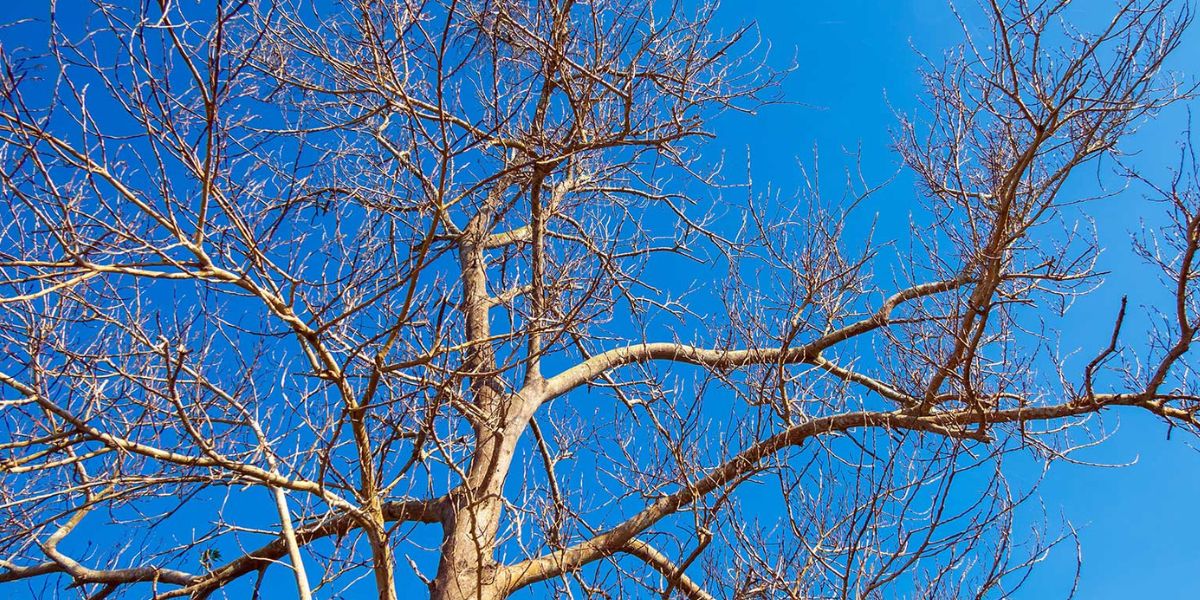
When deciduous trees like oaks and maples drop their leaves, things can get confusing fast. Is my tree dead or dormant? Many property owners ask themselves this question during the colder months.
As the trusted crew for tree services in Southbury, CT, we help homeowners tell the difference between a dormant tree and a dead one. Keep reading to find out.
What Dormancy Means for Your Tree
Trees don’t shut down randomly in winter. They have light-sensing receptors called phytochromes. When these sensors detect shortening days and shifting light wavelengths, photosynthesis halts.
The tree conserves that energy, slowing metabolism to protect itself against cold stress instead. Sometimes, drought or extreme heat triggers the same response. As such, dormancy isn’t always a seasonal thing. Knowing this matters when identifying dead or dormant trees on your property.
How To Tell If a Tree Is Dead or Dormant
Start with the buds. Dormant trees still grow them while dead ones don’t. Next, try the scratch test. Scrape a small section of bark with your fingernail or a pocketknife. Green and moist underneath means the tree is alive.
Gray, brown, or dry means it likely isn’t. Also, try bending a branch. Flexible branches indicate life. Branches that snap without much effort are probably dead. These tree health checks for dormancy or death work on pretty much any deciduous tree.
Reading the Trunk and Roots
The trunk tells a clear story. A dormant tree’s trunk stays intact, with no soft spots or missing bark. A dead or dying tree often shows holes, hollow areas, or large sections of missing bark.
Check the base too. Fungal growth around the roots points to serious decay. So does a high volume of fallen branches that weather alone can’t explain.
Signs a Tree Is Dormant vs. Dead
If you’re still unsure, spring settles it. Healthy trees produce new buds by late spring. Dead wood stays bare.
If the tree poses no immediate hazard, waiting is reasonable. But if you ask yourself, “Is my tree dead or dormant?” because something looks seriously wrong, don’t delay. A confirmed dead tree can also become a habitat for wood-boring insects, which may spread to healthy nearby trees if you delay removal.
Why Dead Tree Removal Isn’t a DIY Job
Dead wood fails without warning. That makes removal dangerous without proper equipment. The difference between a dead tree and a dormant tree can carry real legal weight, too. In many jurisdictions, homeowners may face liability if a neglected dead tree damages a neighboring property.
Removal is especially hazardous when dead branches sit high in the canopy, where experts need professional rigging equipment to manage unpredictable failure points.
Get a Straight Answer From the Experts
Still asking yourself, “Is my tree dead or dormant?” Sometimes, the symptoms of an unhealthy tree aren’t clear-cut, even after a close inspection. At Mr. Treeman, our team can assess your tree and give you a straight answer.
If it needs to come down, we handle tree removal safely and efficiently. Call us at (203) 879-3645 today to discuss your tree care needs.